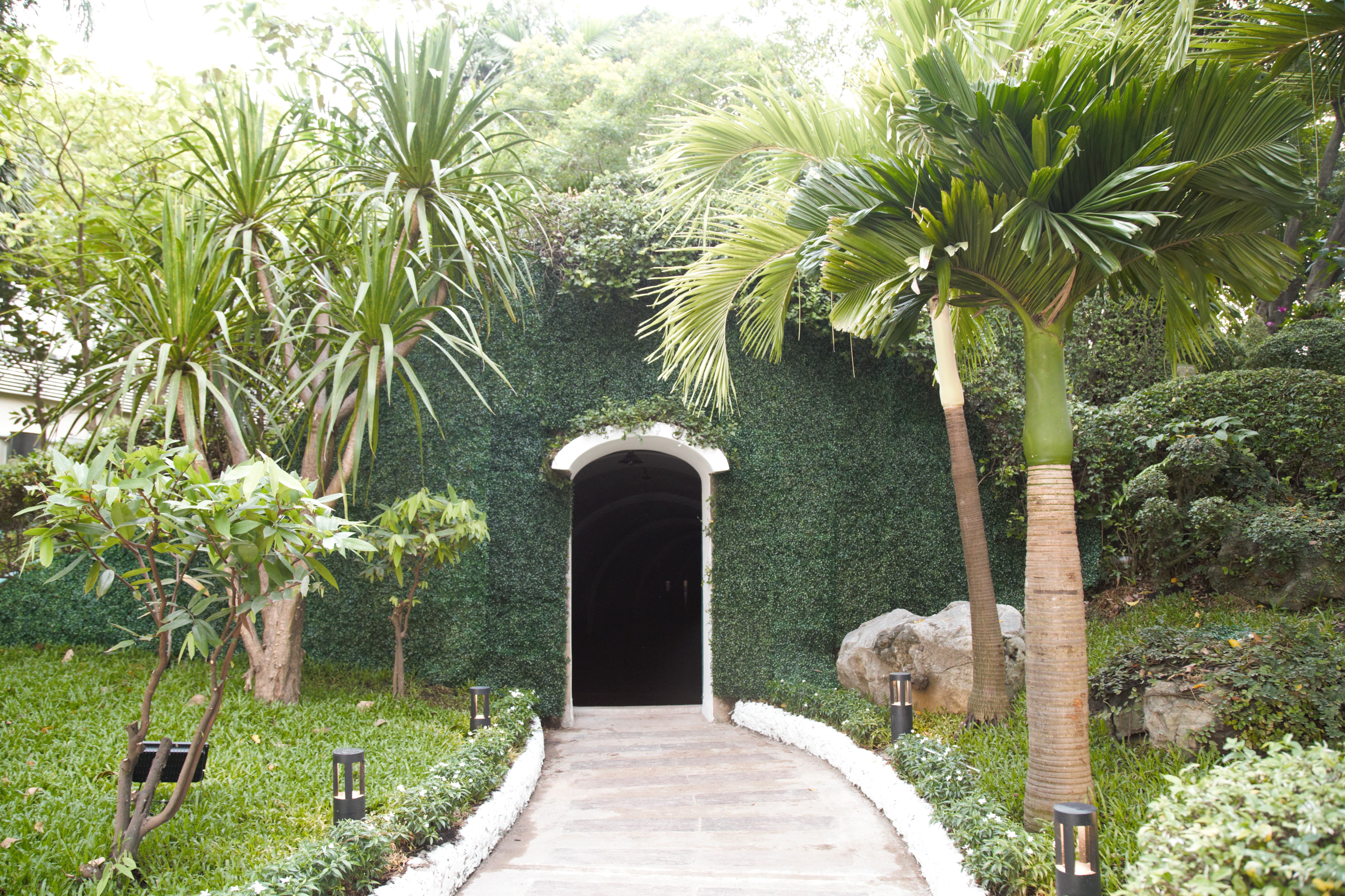
Noen Phra Nang
Air Raid Shelter Suan Sunandha was
originally a inner royal court area of
Dusit Palace. During King
Chulalongkorn's (Rama V) second
European tour in 1907, he observed
several royal gardens in Europe,
particularly enjoying Villa Nobel in
Sanremo, Italy. Inspired by this, he
envisioned creating a private forest
garden for his own leisure. Upon
returning to the capital in 1908, he
immediately laid out the design for Suan
Sunandha as a forest garden. He ordered
the construction of a gate leading from
Buai Road in Dusit Palace to Suan
Sunandha, named Pratu Si Sae
or Pratu Sunandha
Thawan. He designed the landscape
with rocky hills, canals, flower
gardens, and various royal mansions
scattered throughout. He graciously
ordered the excavation of canals and a
large pond within Suan Sunandha, as well
as a canal in Dusit Palace named Khlong Meng
Seng. The soil excavated
from these canals and the large pond was
used to construct a large hill, which
currently serves as the site for the
Royal Monument of Queen Sunandha
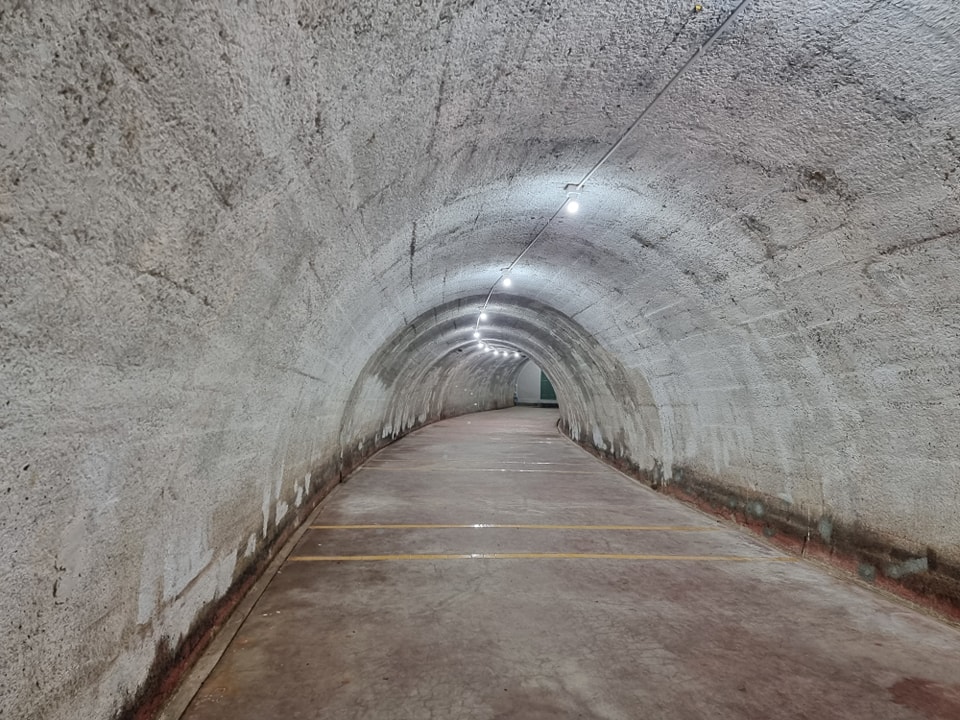
Kumariratana. During its construction, a
tunnel was built for practical utility
prior to being covered with soil to
ensure the hill's structural
stability and strength. As King Rama V
noted in a royal letter to Chao Phraya
Yommarat (Pan Sukhum): "I feel it
would be a pity to waste the soil along
Khlong Meng Seng, as it is close to the
garden we plan to expand. If brought up
to the garden, it could be piled up to
form quite a high hill." During the reign
of King Chulalongkorn, the Suan Sunandha
royal area remained mostly a forest
garden, and construction was incomplete
when his reign ended. King Vajiravudh
(Rama VI) continued the construction
until its completion in 1923. When Her
Highness Princess Saisavali Bhiromya,
Chrom Phra Sutthasininat Piyamaharaj
Padivaraddha, Royal Consort of King
Chulalongkorn, moved to reside
permanently at her mansion in Suan
Sunandha (now Building 27, Sai Suddha
Nophadol) alongside her royal daughters,
relatives, and court attendants, Suan
Sunandha became the final center of the
Inner Royal Court before the political
transition. Her Highness used the tunnel
beneath the hill to store everyday
utensils, chinaware, and non-precious
items. Following the 1932 Revolution,
court attendants transported all stored
items to Her Royal Highness Princess
Nibha Nobhadol, who was living in
political exile in Java, leaving the
tunnel unused. In 1937, the
cabinet under Phraya
Phahonphonphayuhasena resolved to
convert Suan Sunandha into an
educational institution for women, named
Suan Sunandha Wittayalai School. During
World War II, this tunnel served as an
air-raid shelter for teachers and
students, as well as a storage site for
all crucial documents of the Ministry of
Education at the time. As time has
passed to the present day, this tunnel
remains an enduring part of the
university that stands against time. If
the tunnel had a life of its own, it
would surely have countless stories
spanning over a century to endlessly
tell the descendants of Suan
Sunandha.